
Brass vs Stainless Steel Moulding Inserts – Which One Should You Choose?
Introduction
In plastic injection moulding and precision component manufacturing, moulding inserts play a vital role in improving the strength and durability of plastic parts. These small but highly engineered components allow plastic products to have strong, reliable threaded connections that can withstand repeated assembly and mechanical loads.
However, one common question manufacturers often face is:
Should you choose brass moulding inserts or stainless steel moulding inserts?
Both materials are widely used in the industry, and each offers specific advantages depending on the application, environmental conditions, and performance requirements.
Selecting the right material is important because it directly affects product reliability, durability, corrosion resistance, and long-term performance.
In this article, we will explore the key differences between brass and stainless steel moulding inserts, their benefits, and how to determine which one is best suited for your application.
Understanding Moulding Inserts
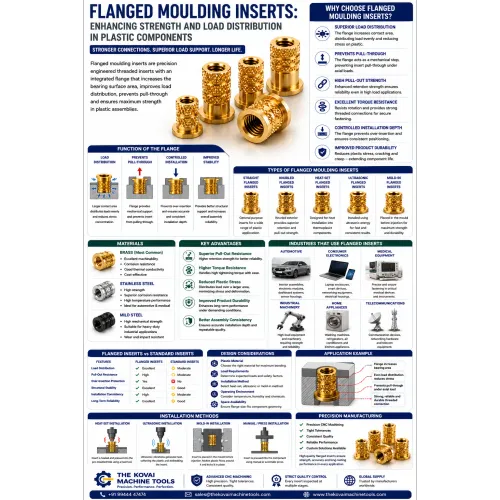
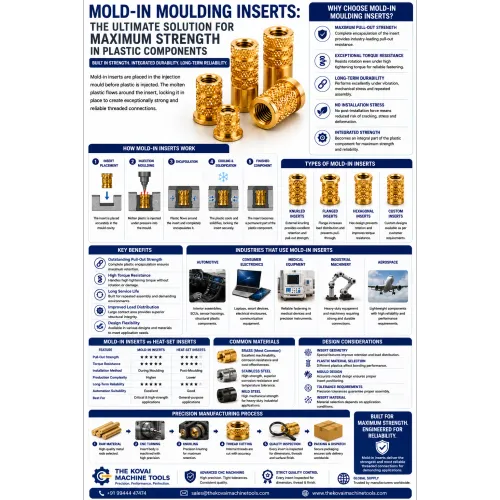
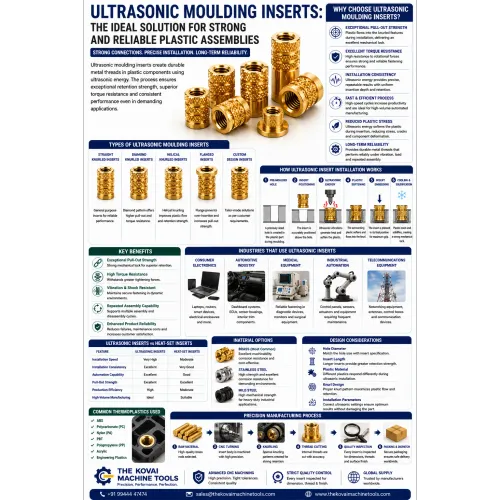
Moulding inserts are precision-machined metal components embedded into plastic parts to provide strong internal threads. These inserts allow screws or bolts to be fastened securely without damaging the plastic material.
They are commonly used in:
- Plastic injection moulded parts
- Automotive components
- Electronic enclosures
- Industrial machinery
- Consumer appliances
Because plastic threads can easily wear out or strip under repeated use, moulding inserts provide durable metal threads that significantly improve product life.
The two most common materials used for these inserts are brass and stainless steel.
Brass Moulding Inserts
Brass is one of the most widely used materials for manufacturing moulding inserts. It is a copper-based alloy known for its excellent machinability and corrosion resistance.
Why Brass Is Popular for Moulding Inserts
Brass offers several advantages that make it ideal for precision insert manufacturing.
Excellent Machinability
Brass is very easy to machine using CNC turning processes. This allows manufacturers to produce inserts with high accuracy, fine threads, and smooth finishes.
Because of this property, brass inserts can be manufactured efficiently while maintaining tight tolerances.
Good Corrosion Resistance
Brass naturally resists corrosion in many environments. This makes brass inserts suitable for applications where the component may be exposed to moisture or moderate environmental conditions.
Smooth Thread Engagement
Brass threads provide smooth and reliable engagement with screws or bolts, reducing friction during assembly.
This improves the assembly process and prevents thread damage.
Cost-Effective Material
Compared to many other engineering metals, brass is relatively economical. This makes it a popular choice for large-volume production of moulding inserts.
Electrical Conductivity
Brass is also electrically conductive, which makes it suitable for applications in electrical and electronic components.
Applications of Brass Inserts
Brass moulding inserts are commonly used in industries such as:
Consumer Electronics
Plastic housings for electronic devices often use brass inserts for fastening internal components.
Appliance Manufacturing
Household appliances use brass inserts to ensure durable threaded connections in plastic parts.
Automotive Interiors
Brass inserts are widely used in interior plastic components where moderate strength and corrosion resistance are required.
Electrical Equipment
Because brass is conductive, it is often used in electrical assemblies and connectors.
Stainless Steel Moulding Inserts
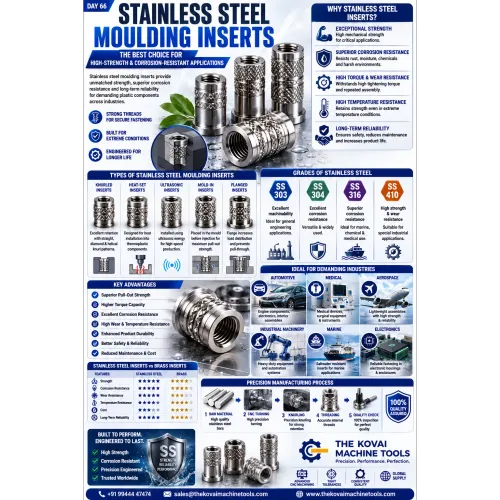
Stainless steel is another popular material used in moulding insert manufacturing. It is known for its high strength, durability, and excellent corrosion resistance.
Stainless steel inserts are typically used in applications where stronger mechanical performance or harsh environmental resistance is required.
Key Advantages of Stainless Steel Inserts
High Mechanical Strength
Stainless steel is much stronger than brass. This allows stainless steel inserts to handle higher loads and greater tightening torque.
This makes them ideal for heavy-duty applications.
Excellent Corrosion Resistance
One of the biggest advantages of stainless steel is its ability to resist corrosion in harsh environments.
Stainless steel inserts perform well in environments exposed to:
- Moisture
- Chemicals
- Saltwater
- Extreme weather conditions
This makes them suitable for outdoor and industrial applications.
High Temperature Resistance
Stainless steel can withstand higher temperatures compared to brass.
This is important in industries where components are exposed to heat, such as automotive or industrial equipment.
Long-Term Durability
Because of its strength and resistance to environmental factors, stainless steel inserts offer exceptional long-term durability.
Applications of Stainless Steel Inserts
Stainless steel moulding inserts are commonly used in industries that demand high performance and durability.
Automotive Industry
Automotive components often require strong threaded connections that can handle vibration, mechanical loads, and temperature changes.
Industrial Machinery
Machines and equipment used in manufacturing rely on stainless steel inserts for reliable assembly.
Medical Equipment
Stainless steel is commonly used in medical devices due to its durability and resistance to corrosion.
Outdoor Equipment
Products used in outdoor environments benefit from stainless steel inserts because they resist rust and environmental damage.
Comparing Brass and Stainless Steel Inserts
Both materials provide reliable performance, but they serve different purposes depending on the application.
Machinability
Brass is easier to machine than stainless steel. This allows manufacturers to produce inserts more efficiently with highly precise threads.
Strength
Stainless steel is stronger than brass and can handle higher mechanical loads.
Corrosion Resistance
Both materials resist corrosion, but stainless steel performs better in harsh environments.
Cost
Brass inserts are generally more cost-effective compared to stainless steel inserts.
Weight
Brass inserts are typically lighter than stainless steel inserts.
How to Choose the Right Moulding Insert Material
Choosing the right material depends on several factors related to the product design and operating environment.
Mechanical Load
If the component needs to withstand heavy loads or high torque, stainless steel inserts may be the better choice.
Environmental Conditions
For applications exposed to moisture, chemicals, or outdoor environments, stainless steel offers better corrosion resistance.
Production Cost
If cost efficiency is important and the application does not require extreme strength, brass inserts can be an excellent choice.
Assembly Requirements
For applications requiring smooth thread engagement and frequent assembly, brass inserts perform very well.
Importance of Precision Manufacturing
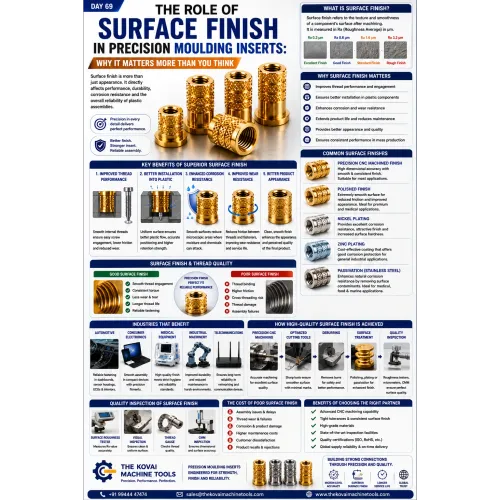
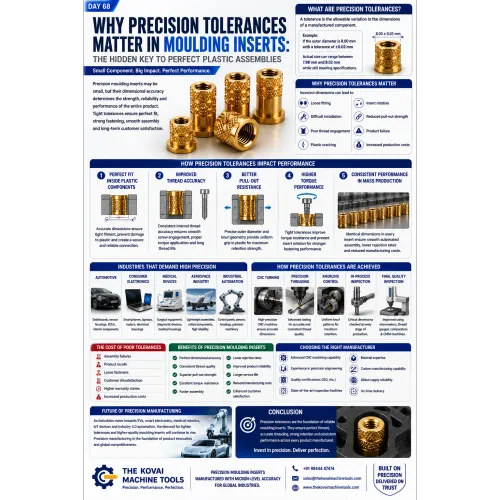
Regardless of the material used, the performance of moulding inserts depends heavily on precision manufacturing.
High-quality inserts must be produced with:
- Accurate thread profiles
- Tight tolerances
- Consistent dimensions
- Smooth surface finishes
These factors ensure that the inserts fit properly and provide reliable fastening in plastic components.
Manufacturers typically use CNC turning and precision machining to produce inserts that meet strict engineering requirements.
Why Industries Depend on Precision Moulding Inserts
Modern manufacturing requires components that are both lightweight and durable. Plastic injection moulding provides an efficient way to produce such parts, but plastic alone cannot deliver strong threaded connections.
Precision moulding inserts provide the perfect solution by combining the strength of metal with the versatility of plastic components.
This is why industries such as automotive, electronics, industrial equipment, and consumer appliances depend heavily on moulding inserts.
Conclusion
Both brass and stainless steel moulding inserts play an important role in strengthening plastic components and improving product reliability.
Brass inserts are widely used because of their excellent machinability, smooth threading, and cost-effectiveness. They are ideal for many standard applications where moderate strength and corrosion resistance are sufficient.
Stainless steel inserts, on the other hand, offer superior strength, durability, and resistance to harsh environments. They are preferred for heavy-duty and demanding applications.
By selecting the right insert material based on the application requirements, manufacturers can ensure better product performance, durability, and long-term reliability.
Call to Action
If your manufacturing process requires high-quality moulding inserts made from brass, stainless steel, or other engineering materials, working with a reliable precision manufacturer is essential.
The Kovai Machine Tools specializes in manufacturing precision moulding inserts and CNC turned components designed to meet the needs of modern industries.
With expertise in precision machining and high-quality materials, we provide components that ensure accuracy, durability, and reliable performance in your products.
📞 Contact us today to discuss your requirements or request a quotation for precision moulding inserts tailored to your application.
Partner with a trusted precision component manufacturer and strengthen the performance of your products with reliable moulding inserts. 🚀
Keywords