
The Importance of Knurling in Moulding Inserts – Why It Matters More Than You Think
Introduction
When it comes to moulding inserts, most people focus on material, thread quality, or precision machining. However, one critical feature that often goes unnoticed—but plays a major role in performance—is knurling.
Knurling is not just a surface pattern. It is a functional design element that directly impacts how well a moulding insert holds inside a plastic component.
Without proper knurling, even a high-quality insert can fail due to:
- Rotation inside plastic
- Pull-out under load
- Weak bonding
In this blog, we’ll explore why knurling is essential in moulding inserts, how it works, and how it benefits end users across industries.
What Is Knurling in Moulding Inserts?
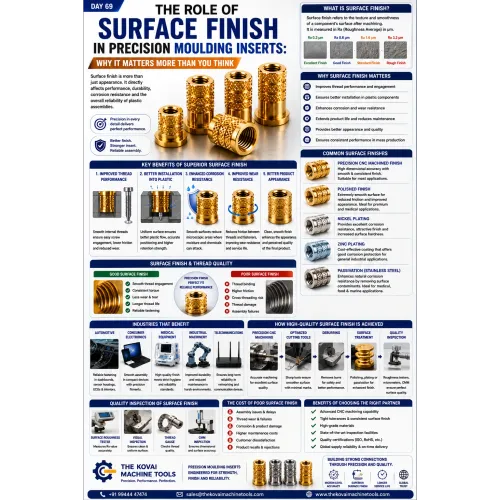
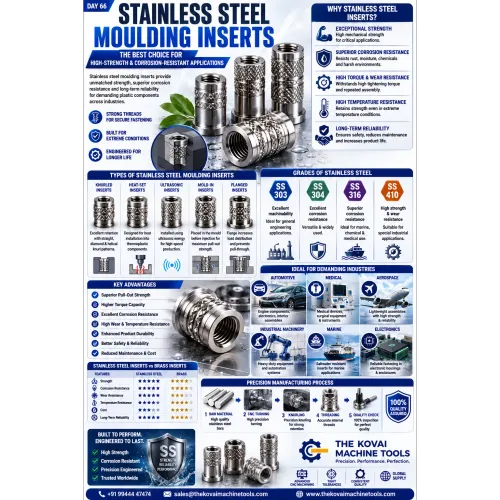
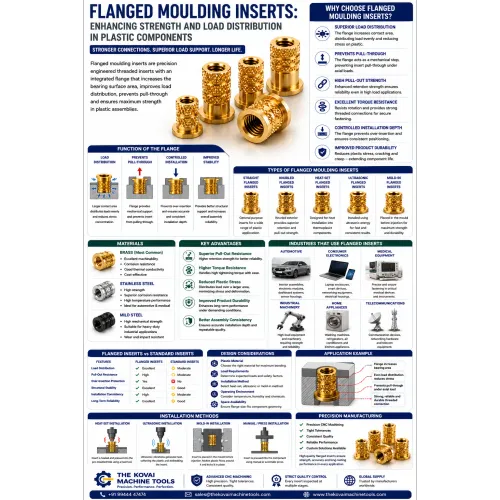
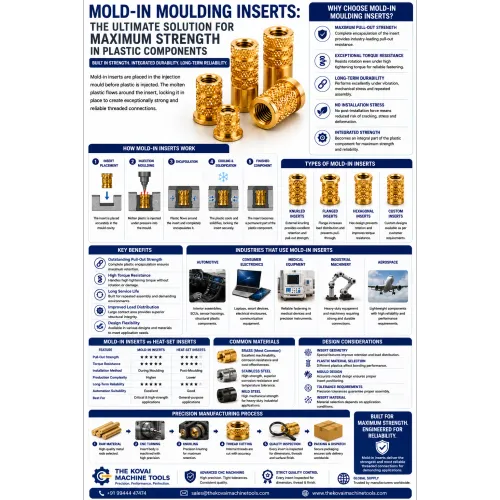
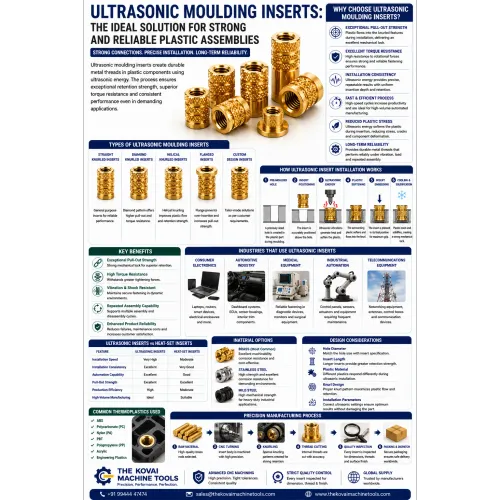
Knurling is a patterned texture created on the outer surface of an insert. It typically consists of:
- Straight lines
- Diamond patterns
- Helical grooves
These patterns are precisely machined during CNC turning to enhance grip and retention.
Why Knurling Is Critical for Insert Performance
1. Prevents Rotation Inside Plastic
One of the biggest challenges in plastic components is insert rotation during screw tightening.
Without Knurling:
- Insert spins inside plastic
- Assembly fails
With Knurling:
- Surface grips the plastic
- Prevents rotation completely
2. Improves Pull-Out Resistance
Knurling increases the surface area and creates mechanical locking between the insert and plastic.
Result:
- Higher resistance to axial forces
- Stronger and more secure fitting
3. Enhances Bonding with Plastic
During installation (especially heat-set or mould-in):
- Plastic flows into knurled grooves
- Creates strong mechanical interlocking
This improves long-term stability.
4. Distributes Load Evenly
Knurled surfaces help distribute stress across the plastic material.
Benefit:
- Reduces chances of cracking
- Improves durability
5. Supports Repeated Assembly
Knurled inserts remain stable even after multiple screw tightening cycles.
This ensures:
- Consistent performance
- Long product life
Types of Knurling Used in Moulding Inserts
Straight Knurling
- Parallel grooves
- Good for basic grip
Diamond Knurling
- Cross-pattern design
- Provides maximum grip and retention
Helical Knurling
- Angled grooves
- Ideal for resisting both rotation and pull-out forces
Where Knurling Makes the Biggest Difference
Knurled moulding inserts are widely used in:
Consumer Electronics
- Mobile housings
- Laptop assemblies
- Plastic enclosures
Automotive Components
- Interior plastic parts
- Electrical housings
Industrial Equipment
- High-load plastic components
- Machinery housings
Appliances
- Durable fastening in plastic bodies
What Happens If Knurling Is Poor?
Poorly designed or low-quality knurling can cause:
- Insert loosening
- Rotation during assembly
- Product failure
- Increased warranty issues
Key Factors in Good Knurling Design
To achieve the best performance, knurling must be:
- Precisely machined
- Consistent in pattern
- Suitable for the plastic material
- Optimized for installation method
Role of Precision Manufacturing
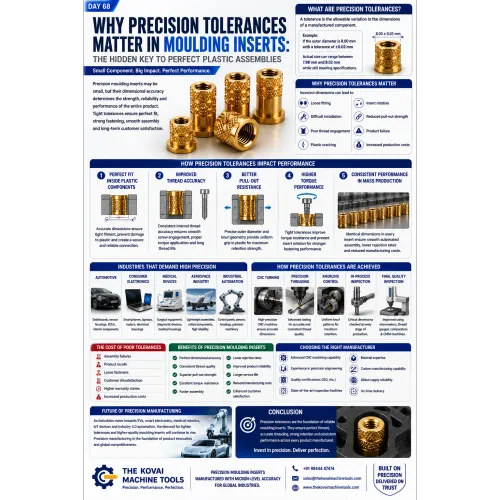
Knurling is not just about pattern—it requires precision CNC machining to ensure:
- Uniform depth
- Accurate spacing
- Strong grip performance
High-quality manufacturing ensures that every insert performs reliably.
Benefits for End Customers
Proper knurling directly improves:
- Product reliability
- Assembly efficiency
- Durability
- Reduced maintenance
- Long-term performance
Conclusion
Knurling may look like a small design feature, but it plays a major role in the performance of moulding inserts.
It ensures strong grip, prevents rotation, improves pull-out resistance, and enhances overall durability.
Ignoring knurling can lead to serious product issues, while proper knurling design ensures reliable and long-lasting plastic components.
Keywords