
Heat-Set Brass Inserts – The Best Solution for Strong and Permanent Plastic Fastening
Introduction
In modern plastic component design, achieving a strong and permanent threaded connection is critical—especially in applications that demand durability, repeated assembly, and resistance to mechanical stress.
While there are several types of moulding inserts available, heat-set brass inserts stand out as one of the most reliable and widely used solutions.
These inserts are specifically designed to be installed using heat, allowing them to bond securely with plastic materials. The result is a high-strength, permanent fastening solution that significantly improves product performance.
From consumer electronics to automotive components, heat-set brass inserts are trusted across industries for their superior retention strength, durability, and precision.
In this article, we will explore what heat-set brass inserts are, how they work, and why they are the best choice for many plastic applications.
What Are Heat-Set Brass Inserts?
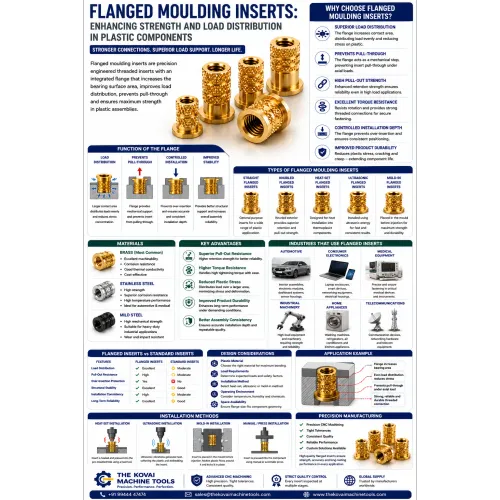
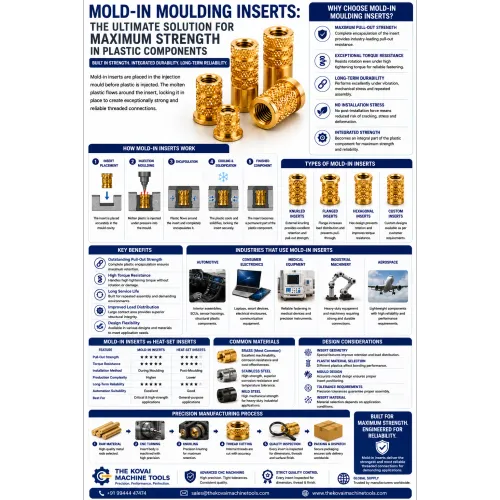
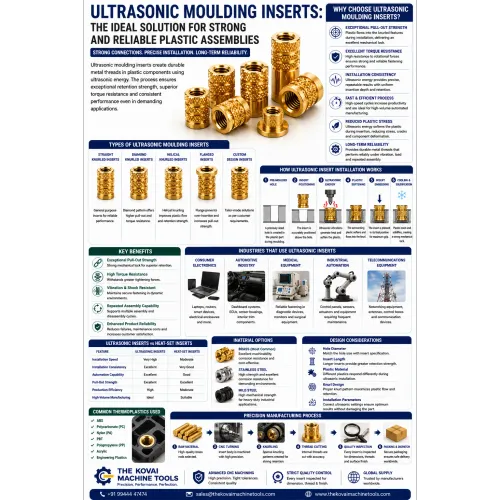
Heat-set brass inserts are precision-machined metal inserts made from brass, designed to be embedded into plastic components using controlled heat and pressure.
Unlike press-fit inserts, which rely on mechanical force, heat-set inserts use thermal energy to create a strong bond between the insert and the plastic material.
These inserts typically feature:
- Knurled or textured outer surfaces
- Precision internal threads
- High-quality brass construction
How Heat-Set Brass Inserts Work
The installation process involves heating the insert using a specialized tool and pressing it into a pre-moulded hole in the plastic component.
Step-by-Step Process
- The insert is heated to a controlled temperature
- It is pressed into the plastic hole
- The surrounding plastic softens and flows around the insert
- Once cooled, the plastic solidifies, locking the insert in place
This process creates a strong mechanical and thermal bond that ensures long-term stability.
Why Brass Is Ideal for Heat-Set Inserts
Brass is the preferred material for heat-set inserts due to its unique properties.
1. Excellent Thermal Conductivity
Brass distributes heat evenly, allowing the insert to:
- Melt surrounding plastic uniformly
- Avoid damage to the component
- Ensure smooth installation
2. High Machinability
Brass can be precisely machined to produce:
- Accurate thread profiles
- Consistent dimensions
- Smooth finishes
3. Corrosion Resistance
Brass resists corrosion, making it suitable for:
- Humid environments
- Electrical applications
- Long-term use
4. Strong and Durable Threads
Brass inserts provide reliable threads that withstand:
- Repeated tightening
- Mechanical stress
- Long-term usage
Advantages of Heat-Set Brass Inserts
1. Superior Retention Strength
Because the plastic flows into the knurled surface during installation, heat-set inserts offer excellent resistance to pull-out and rotation.
2. Reduced Stress on Plastic
Unlike press-fit inserts, heat-set installation softens the plastic, reducing stress and preventing cracks.
3. Ideal for Repeated Assembly
Heat-set inserts provide durable threads that allow repeated tightening and loosening without damage.
4. Clean and Professional Finish
The installation process ensures that inserts are:
- Properly aligned
- Flush with the surface
- Visually clean
5. Compatibility with Various Plastics
Heat-set inserts work well with:
- ABS
- Nylon
- Polycarbonate
- Other engineering plastics
Applications of Heat-Set Brass Inserts
Consumer Electronics
Used in plastic housings for:
- Smartphones
- Laptops
- Electronic enclosures
Automotive Industry
Used in components requiring:
- High strength
- Vibration resistance
Industrial Equipment
Used in machinery parts for reliable fastening.
Appliances
Used in home appliances for durable assembly.
Key Design Considerations
To achieve the best results, several factors must be considered:
Hole Size and Tolerance
The hole must be designed to match the insert dimensions for proper installation.
Installation Temperature
The temperature must be controlled to avoid:
- Overheating
- Plastic damage
Insert Design
Knurling and geometry should match the application requirements.
Plastic Material
Different plastics respond differently to heat, so compatibility is essential.
Common Mistakes to Avoid
Avoiding these mistakes ensures optimal performance:
- Using incorrect temperature settings
- Poor alignment during installation
- Selecting the wrong insert size
- Using low-quality inserts
Benefits for End Customers
Heat-set brass inserts improve product performance in several ways:
- Strong and reliable fastening
- Longer product life
- Smooth assembly and maintenance
- Reduced repair costs
Conclusion
Heat-set brass inserts provide one of the most effective solutions for creating strong, durable, and permanent threaded connections in plastic components.
Their ability to bond securely with plastic, combined with the excellent properties of brass, makes them a preferred choice across industries.
By using high-quality, precision-engineered heat-set inserts, manufacturers can ensure reliable performance, improved durability, and long-term value.
Call to Action
If you are looking for precision heat-set brass inserts that deliver superior strength and reliability, choosing the right manufacturing partner is essential.
The Kovai Machine Tools specializes in producing high-quality moulding inserts and CNC turned components tailored to your requirements.
With advanced machining and strict quality control, we deliver products that ensure accuracy, durability, and long-lasting performance.
📞 Contact us today to discuss your requirements or request a quotation for heat-set brass inserts.
Strengthen your plastic components with the best heat-set brass insert solutions. 🚀
Keywords