
Introduction
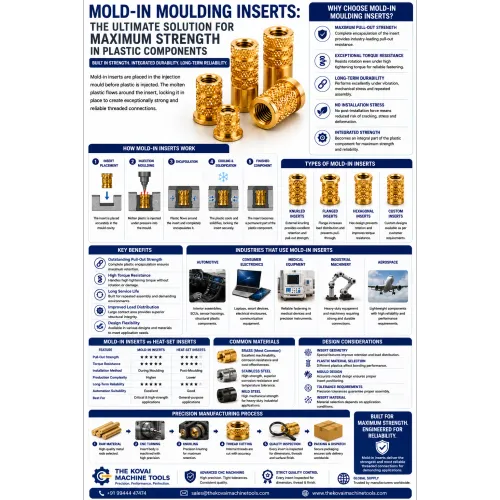
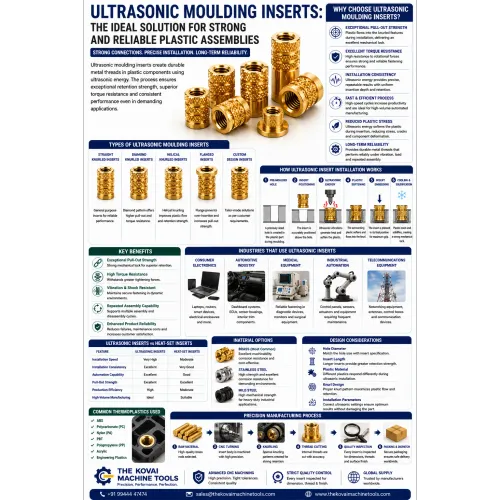
Precision moulding inserts are essential components in modern manufacturing, especially in plastic injection moulding. They provide strength, durability, and reliable threaded connections that plastic alone cannot achieve.
However, even high-quality moulding inserts can fail if they are not selected, designed, or installed correctly.
Many manufacturers unknowingly make small mistakes that lead to:
- Weak fastening
- Cracking of plastic parts
- Insert loosening
- Reduced product life
These issues not only affect product performance but also increase maintenance costs and customer dissatisfaction.
In this article, we will explore the most common mistakes to avoid when using moulding inserts, and how to ensure the best results for your application.
Why Proper Use of Moulding Inserts Matters
Moulding inserts are used to improve:
- Thread strength
- Load-bearing capacity
- Durability of plastic parts
But their effectiveness depends on correct material selection, design, and installation method.
Avoiding common mistakes ensures:
- Longer product life
- Better performance
- Reduced failure rates
- Higher customer satisfaction
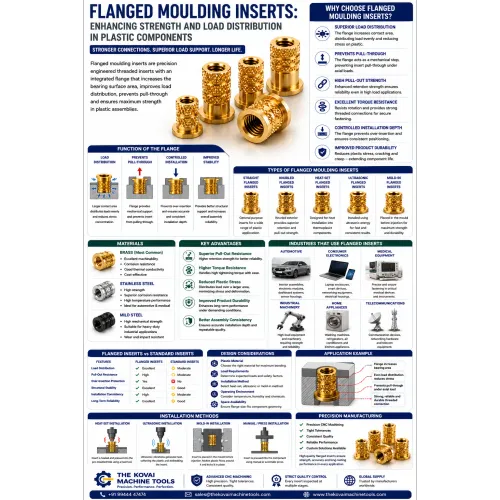
1. Choosing the Wrong Type of Insert
One of the most common mistakes is selecting the wrong type of insert for the application.
The Problem
Using a press-fit insert where a heat-set insert is required (or vice versa) can lead to poor performance.
The Impact
- Weak retention
- Insert loosening
- Reduced load capacity
The Solution
Choose the insert type based on:
- Plastic material
- Load requirements
- Installation method
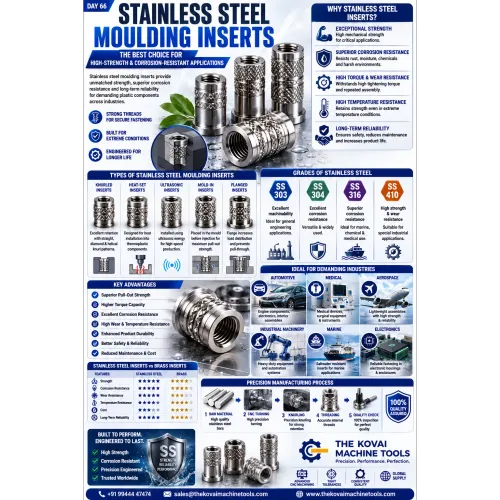
2. Incorrect Material Selection
Not all inserts are made from the same material, and using the wrong one can cause failure.
The Problem
Using mild steel in a corrosive environment or using a low-strength material for heavy loads.
The Impact
- Corrosion
- Deformation
- Reduced lifespan
The Solution
Select materials such as:
- Brass for general applications
- Stainless steel for corrosion resistance
- Mild steel for high strength
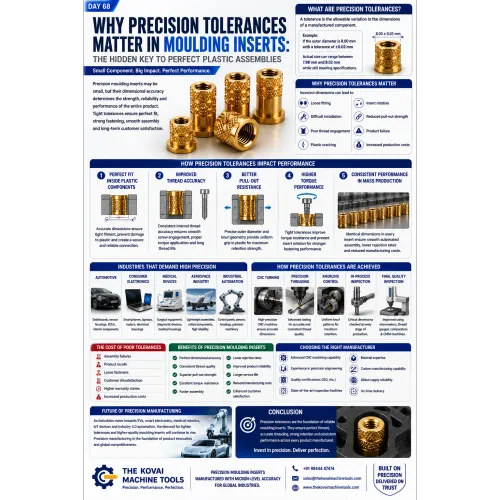
3. Poor Hole Design in Plastic Components
The hole where the insert is installed must be designed correctly.
The Problem
Incorrect hole size or shape can prevent proper installation.
The Impact
- Cracks in plastic
- Loose inserts
- Installation failure
The Solution
Ensure:
- Proper hole diameter
- Correct tolerances
- Suitable design for insert type
4. Improper Installation Method
Incorrect installation is a major cause of insert failure.
The Problem
Applying too much force or incorrect heat during installation.
The Impact
- Damage to plastic
- Misalignment
- Weak bonding
The Solution
Use proper installation techniques:
- Controlled press-fit force
- Correct heat setting temperature
- Proper alignment tools
5. Ignoring Load and Torque Requirements
Every application has specific load and torque requirements.
The Problem
Using inserts that cannot handle the required stress.
The Impact
- Thread stripping
- Insert pull-out
- Product failure
The Solution
Evaluate:
- Load conditions
- Torque requirements
- Safety margins
6. Not Considering Environmental Conditions
Environmental factors play a crucial role in insert performance.
The Problem
Ignoring exposure to moisture, chemicals, or temperature variations.
The Impact
- Corrosion
- Expansion and contraction issues
- Reduced durability
The Solution
Choose materials and designs that suit the operating environment.
7. Poor Quality Manufacturing
Even the best design can fail if the insert is poorly manufactured.
The Problem
Low-quality inserts with poor thread accuracy or surface finish.
The Impact
- Installation issues
- Weak fastening
- Inconsistent performance
The Solution
Always choose inserts manufactured with:
- Precision CNC machining
- Tight tolerances
- High-quality materials
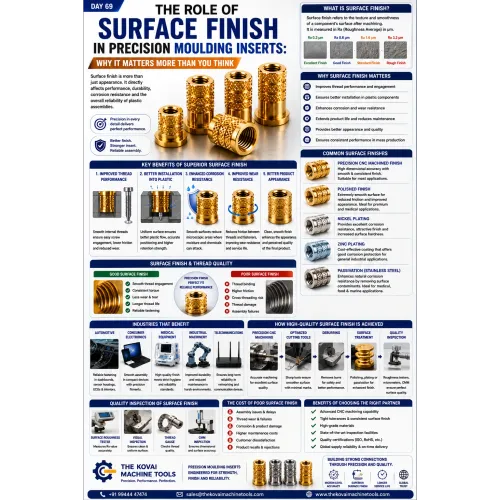
8. Overlooking Surface Finish
Surface finish directly affects insert performance.
The Problem
Rough or inconsistent surface finish reduces bonding and increases wear.
The Impact
- Weak grip in plastic
- Faster wear
- Reduced lifespan
The Solution
Use inserts with:
- Smooth, controlled surface finish
- Proper knurling design
- High-quality machining
9. Lack of Testing and Validation
Skipping testing can lead to unexpected failures in real-world use.
The Problem
Not validating insert performance under actual conditions.
The Impact
- Product recalls
- Customer complaints
- Increased costs
The Solution
Conduct:
- Load testing
- Torque testing
- Environmental testing
How Avoiding These Mistakes Benefits End Customers
When manufacturers avoid these mistakes, the end customer benefits significantly.
End Customer Benefits
- Longer-lasting products
- Reliable performance
- Reduced maintenance
- Better safety
This leads to improved brand trust and customer satisfaction.
Conclusion
Moulding inserts are powerful components that significantly enhance the performance of plastic products—but only when used correctly.
Avoiding common mistakes such as improper material selection, poor installation, and incorrect design ensures that inserts perform reliably over time.
By focusing on precision, quality, and proper engineering practices, manufacturers can maximize the benefits of moulding inserts and deliver superior products to their customers.
Call to Action
If you want to avoid costly mistakes and ensure high-performance moulding inserts, choosing the right manufacturing partner is critical.
The Kovai Machine Tools specializes in producing precision moulding inserts and CNC turned components with exceptional quality and accuracy.
We help you achieve:
✔ Better performance
✔ Longer product life
✔ Reliable fastening solutions
📞 Contact us today to discuss your requirements or request a quotation for precision moulding inserts tailored to your application.
Partner with experts and eliminate failures before they happen. 🚀
Keywords