Heat-Set Brass Inserts: The Preferred Fastening Solution for High-Performance Plastic Components
Introduction
As modern products become smaller, lighter, and more sophisticated, manufacturers increasingly rely on plastic components to achieve cost-effective and efficient designs. Industries such as automotive, consumer electronics, medical devices, telecommunications, and industrial automation extensively use engineering plastics due to their lightweight nature and design flexibility.
However, one challenge remains common across all these industries: creating strong and reliable threaded connections in plastic components.
Plastic threads alone are often unable to withstand repeated assembly, high torque, vibration, and long-term mechanical stress. To overcome these limitations, manufacturers use heat-set brass inserts, one of the most effective fastening solutions available for plastic components.
Heat-set brass inserts provide durable metal threads embedded directly into plastic parts, creating strong fastening points capable of handling demanding applications.
In this article, we will explore what heat-set brass inserts are, how they work, their advantages, applications, installation process, and why they are widely preferred in modern manufacturing.
What Are Heat-Set Brass Inserts?
Heat-set brass inserts are precision-engineered metal inserts designed to be permanently installed into thermoplastic components using heat.
Unlike conventional plastic threads, heat-set inserts provide:
- Durable metal threads
- Improved pull-out strength
- Enhanced torque resistance
- Long-term fastening reliability
These inserts are typically manufactured from high-quality brass and feature specially designed knurling patterns on their outer surfaces.
The knurling helps the insert bond securely with the surrounding plastic during installation.
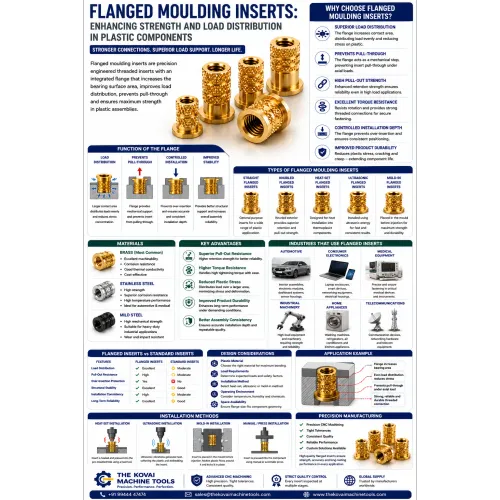
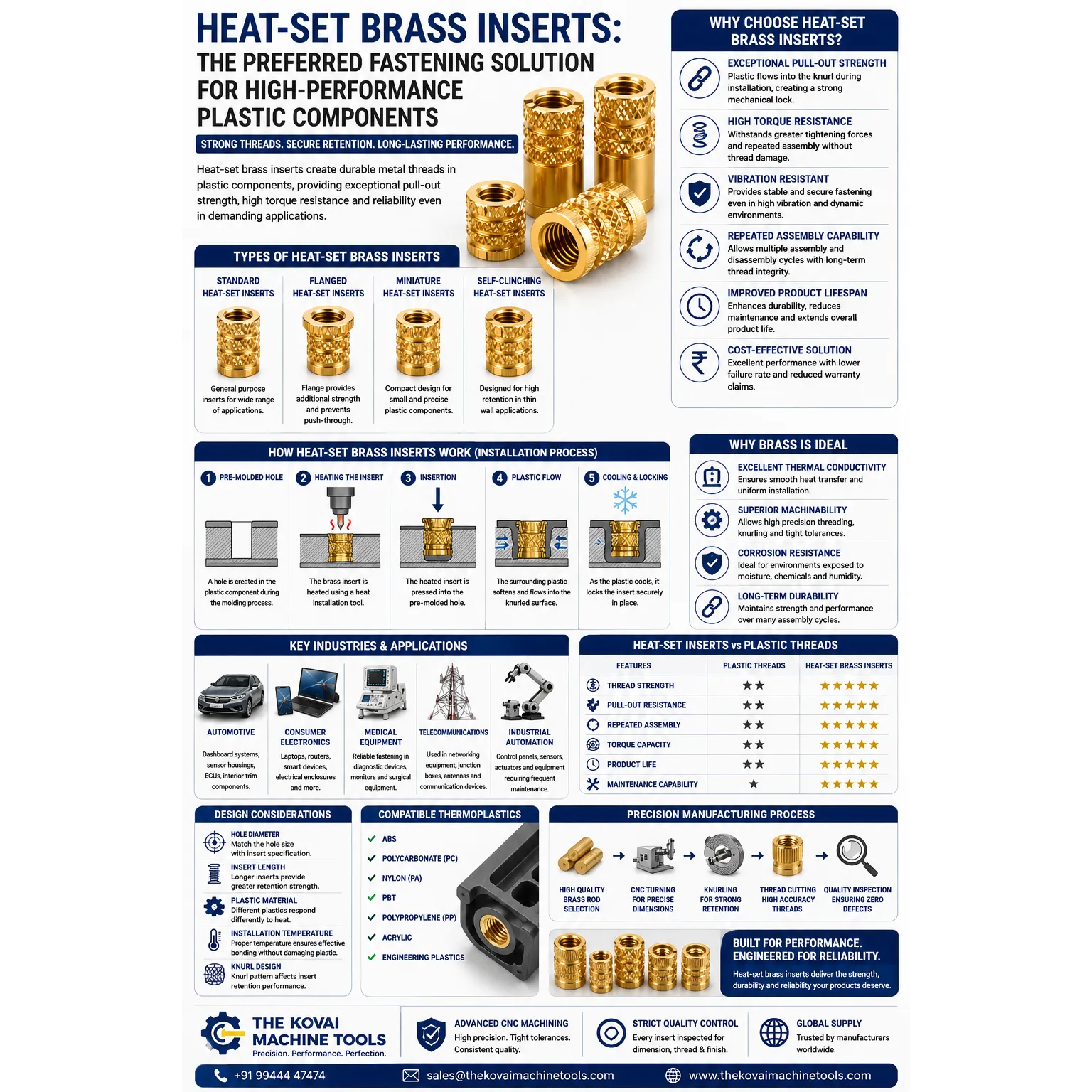
How Heat-Set Brass Inserts Work
The installation process involves heating the insert before pressing it into a pre-molded hole in the plastic component.
Step 1: Pre-Molded Hole
A hole is created in the plastic part during the molding process.
Step 2: Heating the Insert
A specialized heat-installation tool heats the brass insert.
Step 3: Insertion
The heated insert is pressed into the plastic hole.
Step 4: Plastic Flow
The surrounding plastic softens and flows around the knurled surface.
Step 5: Cooling and Locking
As the plastic cools, it solidifies around the insert, creating a strong mechanical bond.
The result is a highly secure threaded connection with exceptional retention strength.
Why Brass Is Ideal for Heat-Set Inserts
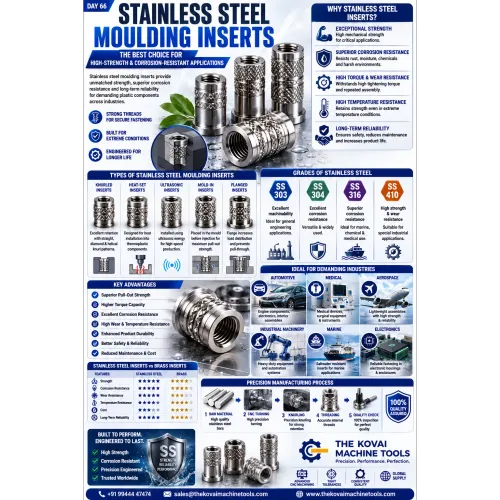
Brass remains the preferred material for heat-set inserts due to its unique properties.
Excellent Thermal Conductivity
Brass transfers heat efficiently, allowing smooth and consistent installation.
This ensures:
- Faster installation
- Uniform plastic flow
- Better insert retention
Superior Machinability
Brass allows manufacturers to produce:
- Precise threads
- Complex knurl patterns
- Tight dimensional tolerances
This contributes to consistent product quality.
Corrosion Resistance
Brass naturally resists corrosion, making it suitable for:
- Electrical products
- Automotive components
- Consumer appliances
- Industrial equipment
Long-Term Durability
Brass inserts maintain their structural integrity even after repeated assembly cycles.
Advantages of Heat-Set Brass Inserts
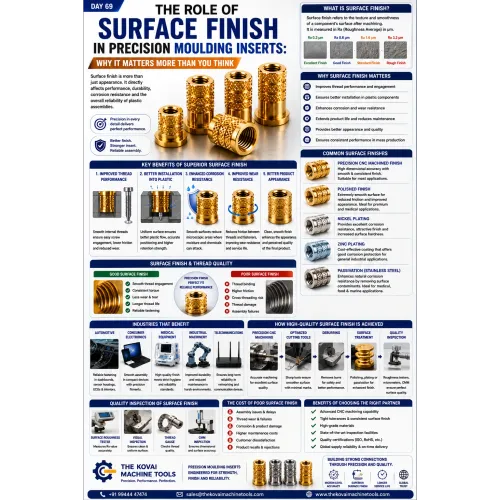
1. Exceptional Pull-Out Strength
One of the biggest advantages of heat-set inserts is their superior pull-out resistance.
As the plastic flows into the knurled surface during installation, a strong mechanical lock is created.
This significantly reduces the risk of insert loosening or removal.
2. High Torque Resistance
Heat-set inserts can withstand much higher tightening forces than plastic threads alone.
Benefits include:
- Stronger fastening
- Improved assembly reliability
- Reduced thread damage
3. Better Performance Under Vibration
Many products operate in environments where vibration is common.
Examples include:
- Vehicles
- Industrial machinery
- Electronic equipment
Heat-set inserts provide stable threaded connections that resist loosening over time.
4. Repeated Assembly Capability
Plastic threads wear out after repeated use.
Heat-set brass inserts allow:
- Multiple assembly cycles
- Frequent maintenance
- Product servicing
Without compromising thread integrity.
5. Improved Product Lifespan
Because the insert protects the threaded connection, the overall life of the product increases significantly.
This reduces:
- Product failures
- Maintenance costs
- Warranty claims
Industries That Use Heat-Set Brass Inserts
Consumer Electronics
Applications include:
- Laptops
- Routers
- Smart devices
- Electrical enclosures
Heat-set inserts provide durable fastening in compact assemblies.
Automotive Industry
Used in:
- Dashboard systems
- Sensor housings
- Electronic control units
- Interior trim components
Their vibration resistance makes them ideal for vehicle applications.
Medical Equipment
Medical devices require precision and reliability.
Heat-set inserts ensure dependable fastening in sensitive equipment.
Telecommunications Equipment
Telecommunication systems rely on durable threaded connections for long-term operation.
Industrial Automation
Automation equipment frequently requires maintenance and reassembly.
Heat-set inserts support repeated service cycles without thread wear.
Design Considerations for Heat-Set Inserts
For optimal performance, engineers should consider:
Hole Diameter
The hole size must match the insert specification.
Insert Length
Longer inserts generally provide greater retention strength.
Plastic Material
Different thermoplastics respond differently during installation.
Installation Temperature
Proper heating ensures effective bonding without damaging the plastic.
Knurl Design
The knurling pattern directly affects retention performance.
Common Thermoplastics Used with Heat-Set Inserts
Heat-set brass inserts work effectively with:
- ABS
- Polycarbonate (PC)
- Nylon (PA)
- PBT
- Polypropylene (PP)
- Acrylic
- Engineering-grade plastics
The choice depends on application requirements and environmental conditions.
Heat-Set Inserts vs Plastic Threads
FeaturePlastic ThreadsHeat-Set Brass InsertsThread StrengthLowHighPull-Out ResistanceModerateExcellentRepeated AssemblyLimitedExcellentTorque CapacityLowHighProduct LifeModerateLongMaintenance CapabilityLimitedSuperior
This comparison explains why engineers increasingly prefer heat-set inserts in demanding applications.
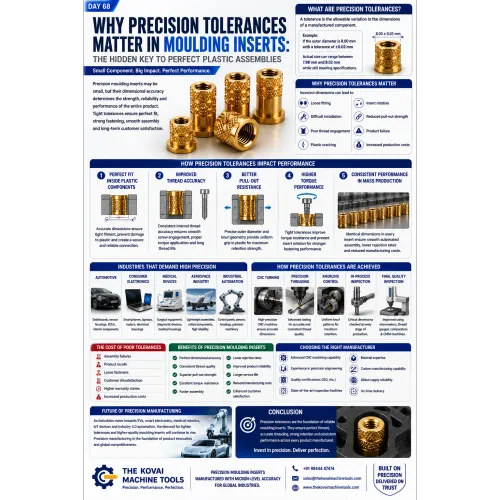
Importance of Precision Manufacturing
The performance of heat-set inserts depends heavily on manufacturing accuracy.
High-quality inserts require:
- Precise dimensions
- Accurate threading
- Consistent knurling
- Tight tolerances
Modern CNC machining ensures every insert meets exact specifications.
Poor-quality inserts can lead to:
- Weak retention
- Installation difficulties
- Product failures
This is why manufacturers should source inserts from experienced precision engineering companies.
Future Demand for Heat-Set Brass Inserts
As industries continue to adopt lightweight plastic assemblies, demand for heat-set inserts continues to grow.
Emerging sectors include:
- Electric vehicles (EVs)
- Smart home devices
- IoT products
- Medical technologies
- Industrial automation systems
The need for stronger and more reliable fastening solutions ensures that heat-set brass inserts will remain a key component in future product designs.
Conclusion
Heat-set brass inserts have become the preferred fastening solution for high-performance plastic components because they provide exceptional pull-out strength, superior torque resistance, and long-term durability.
Their ability to create strong metal threads within plastic parts makes them ideal for industries where reliability, serviceability, and product longevity are critical.
As products continue to evolve toward lighter and more complex designs, heat-set brass inserts will play an increasingly important role in ensuring secure and dependable fastening performance.
Call to Action
Looking for high-quality heat-set brass inserts manufactured to precise engineering standards?
The Kovai Machine Tools specializes in manufacturing premium heat-set brass inserts, knurled moulding inserts, threaded inserts, and custom CNC turned components for industries worldwide.
With advanced CNC machining technology, stringent quality control, and decades of precision manufacturing expertise, we deliver inserts that provide superior performance and long-term reliability.
📞 Contact us today to discuss your heat-set insert requirements and receive a customized engineering solution for your application.
The Kovai Machine Tools – Precision Heat-Set Brass Inserts Engineered for Strength, Reliability, and Performance. 🚀