
Design Considerations When Using Moulding Inserts in Plastic Parts
Introduction
Plastic injection moulding is widely used in modern product manufacturing because it allows companies to produce lightweight, complex, and cost-effective components at large scale. Industries such as automotive, consumer electronics, appliances, and industrial machinery depend heavily on plastic parts in their products.
However, plastic components often require strong and reliable threaded connections for assembly. This is where precision moulding inserts play a critical role.
Moulding inserts are metal components embedded into plastic parts to provide durable internal threads and structural reinforcement. They allow screws and bolts to be tightened securely without damaging the plastic material.
While moulding inserts greatly improve the performance of plastic components, their effectiveness depends on proper design and engineering considerations.
In this article, we will explore the key design considerations when using moulding inserts in plastic parts, helping manufacturers ensure reliable performance, long product life, and efficient assembly.
Why Design Considerations Are Important
Adding moulding inserts to plastic components may seem simple, but incorrect design can lead to serious problems such as:
- Insert loosening or pull-out
- Cracking of plastic parts
- Poor thread alignment
- Assembly difficulties
- Reduced product reliability
Proper design ensures that the insert integrates perfectly with the plastic component and performs reliably throughout the product's lifecycle.
1. Selecting the Right Insert Material
The first important consideration is choosing the right material for the moulding insert.
Different applications require different material properties such as strength, corrosion resistance, or weight reduction.
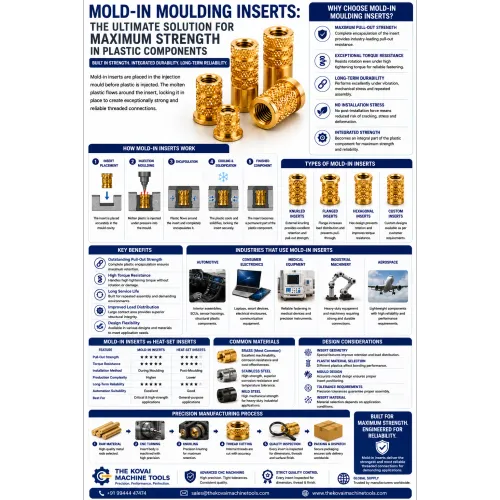
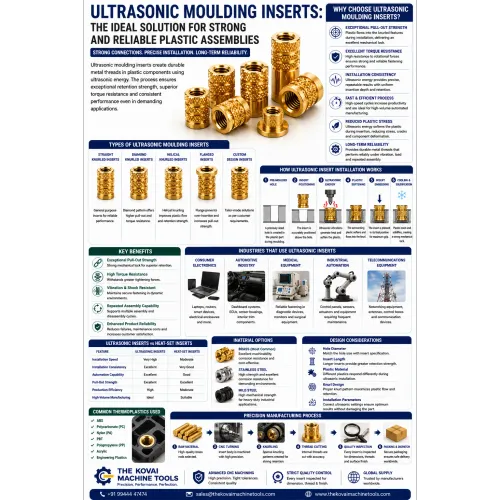
Common Materials Used for Inserts
Brass
Brass is widely used because it offers excellent machinability, corrosion resistance, and smooth threading. It is commonly used in electronics and consumer products.
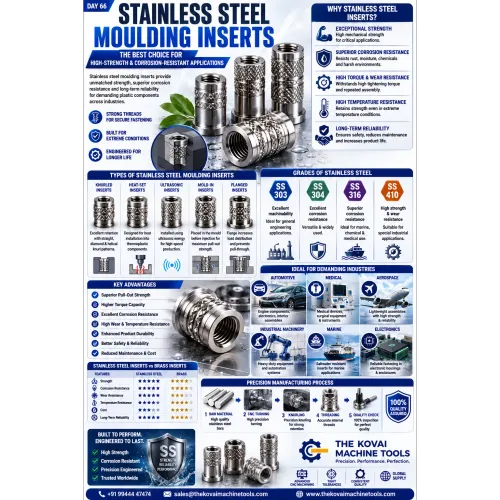
Stainless Steel
Stainless steel provides high strength and excellent corrosion resistance. It is often used in automotive and industrial applications.
Mild Steel
Mild steel inserts offer strong mechanical properties and are suitable for heavy-duty applications.
Aluminium
Aluminium inserts are used in lightweight applications where reducing weight is important.
Choosing the correct material ensures that the insert can handle the mechanical and environmental conditions of the application.
2. Proper Hole Design in Plastic Components
The design of the hole where the insert will be installed is critical for proper installation and performance.
If the hole diameter or depth is incorrect, the insert may not fit securely.
Important Factors
- Hole diameter must match the insert specification
- Adequate depth must be provided for proper engagement
- Proper tolerance must be maintained
Correct hole design ensures strong retention and prevents insert movement during use.
3. Wall Thickness Around the Insert
The thickness of the plastic material surrounding the insert plays a major role in preventing cracking or structural failure.
If the plastic wall is too thin, the material may crack during installation or when the screw is tightened.
Recommended Design Practice
Engineers typically design plastic parts with sufficient wall thickness around the insert to distribute mechanical loads evenly.
This prevents stress concentration and improves durability.
4. Insert Retention Features
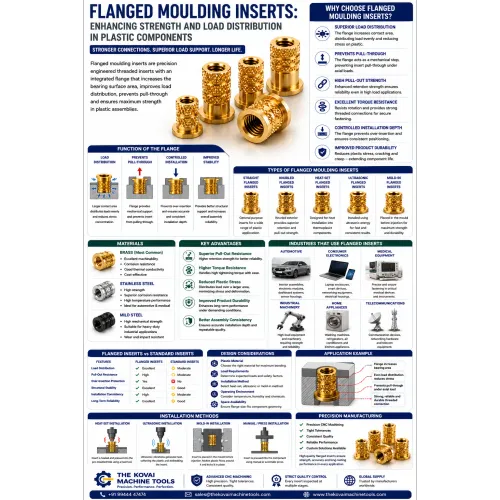
To prevent inserts from rotating or pulling out, they are designed with special features on the outer surface.
These features help the insert grip the plastic securely.
Common Retention Features
- Knurling patterns
- Grooves
- Serrations
- Undercuts
These features improve the mechanical bonding between the insert and the plastic component.
5. Installation Method
The installation method chosen for the insert must be considered during the design stage.
Different types of inserts require different installation techniques.
Common Installation Methods
Press-Fit Installation
Inserts are pressed into a pre-moulded hole using mechanical force.
Heat-Set Installation
Heat is applied to soften the plastic and allow the insert to be embedded.
Ultrasonic Installation
Ultrasonic vibration generates heat and embeds the insert into the plastic.
Mold-In Installation
The insert is placed inside the mould before the injection process.
Each method has specific design requirements that must be considered in advance.
6. Load and Torque Requirements
The insert must be capable of handling the mechanical loads and tightening torque expected in the application.
Design engineers must evaluate:
- Fastener size
- Required tightening torque
- Expected mechanical load
- Frequency of assembly cycles
This ensures that the insert and surrounding plastic material can withstand operational stresses.
7. Preventing Stress Concentration
When screws are tightened into inserts, stress is generated around the threaded area.
If the design does not distribute this stress properly, the plastic component may crack.
Design Strategies
Engineers often include features such as:
- Reinforcement ribs
- Increased wall thickness
- Proper spacing between inserts
These design elements help distribute stress and improve the strength of the component.
8. Thermal Expansion Considerations
Plastic and metal expand at different rates when exposed to temperature changes.
If this difference is not considered, it may cause loosening or structural issues.
Designers must consider the operating temperature range of the product to ensure long-term stability.
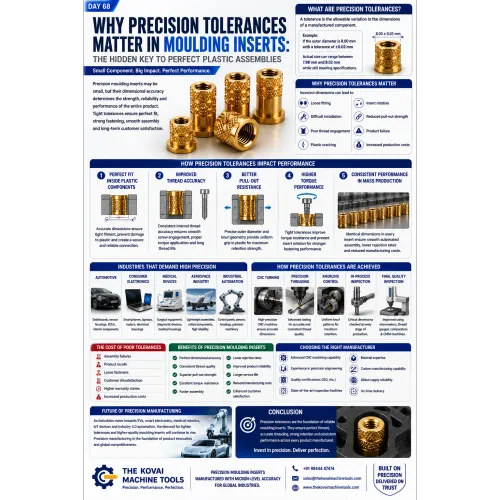
9. Manufacturing Tolerances
Precision manufacturing is essential for moulding inserts.
If the insert dimensions are not accurate, the fit may be too loose or too tight.
High-quality inserts are manufactured with:
- Accurate thread profiles
- Tight dimensional tolerances
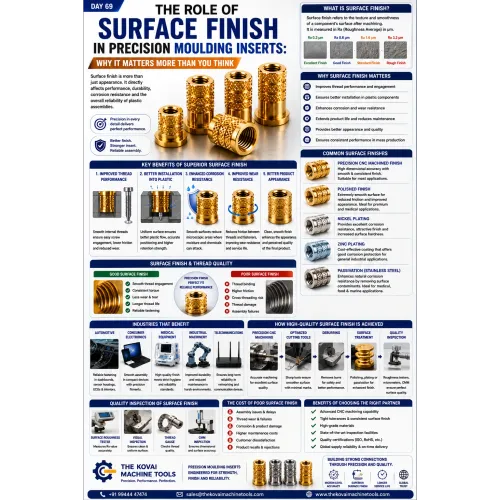
- Smooth surface finishes
This ensures proper installation and reliable fastening.
10. Assembly Efficiency
Manufacturers also consider assembly efficiency when designing plastic components with inserts.
Proper insert design helps ensure:
- Smooth screw engagement
- Reduced assembly time
- Lower defect rates
Efficient assembly is especially important in high-volume production environments.
Industries That Use Moulding Inserts
Many industries rely on moulding inserts to improve the performance of plastic components.
Automotive Industry
Plastic components used in vehicles require strong threaded connections that can withstand vibration and mechanical stress.
Consumer Electronics
Electronic devices use moulding inserts to secure plastic housings and internal components.
Industrial Equipment
Machinery manufacturers use inserts to reinforce plastic components used in equipment assemblies.
Appliance Manufacturing
Household appliances use inserts to ensure strong and durable threaded connections.
Importance of Precision Manufacturing
The success of moulding inserts depends heavily on the quality of manufacturing.
Precision machining processes such as CNC turning are used to produce inserts with high accuracy.
Quality manufacturing ensures:
- Consistent dimensions
- Strong thread engagement
- Reliable installation
- Long product life
Manufacturers must work with experienced suppliers who specialize in precision components.
Conclusion
Moulding inserts play an essential role in strengthening plastic components and improving product reliability.
However, their effectiveness depends greatly on proper design considerations.
Factors such as material selection, hole design, wall thickness, installation method, load requirements, and manufacturing precision must all be carefully evaluated during the design process.
By following these best practices, manufacturers can ensure that moulding inserts provide reliable performance and long-term durability in plastic products.
Call to Action
If your products require high-quality precision moulding inserts or custom CNC turned components, working with an experienced manufacturing partner is essential.
The Kovai Machine Tools specializes in manufacturing precision moulding inserts, rivets, bushes, shafts, and other turned components designed for modern industrial applications.
Our expertise in precision machining and high-quality materials ensures that every component delivers accuracy, strength, and long-term reliability.
📞 Contact us today to discuss your requirements or request a quotation for precision moulding inserts tailored to your application.
Partner with a trusted precision component manufacturer and enhance the performance of your plastic components with reliable moulding inserts. 🚀
Keywords