
Knurling Improves the Performance of Moulding Inserts
Introduction
In the world of plastic injection moulding, even the smallest engineering details can have a major impact on product performance. One such critical detail is knurling on moulding inserts.
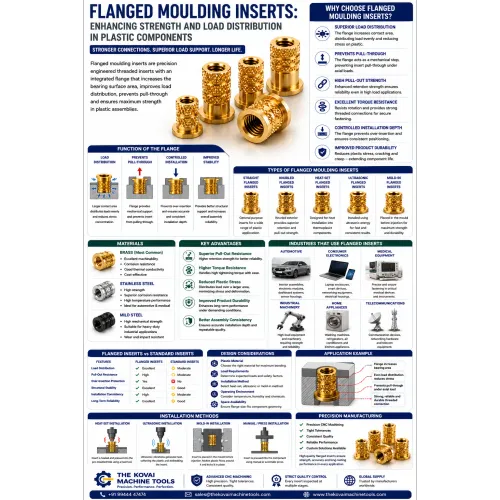
Moulding inserts are precision-machined metal components embedded into plastic parts to provide strong internal threads and reinforcement. These inserts are widely used in industries such as automotive, electronics, medical equipment, appliances, and industrial machinery.
However, simply placing a smooth metal insert inside a plastic component is not enough to ensure reliable performance. The insert must remain firmly locked inside the plastic during assembly, operation, vibration, and repeated usage.
This is where knurling plays a crucial role.
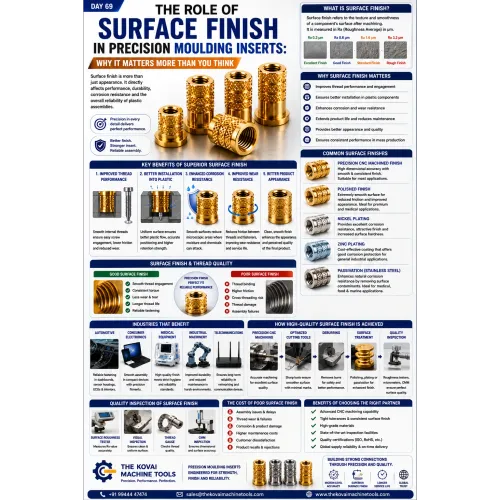
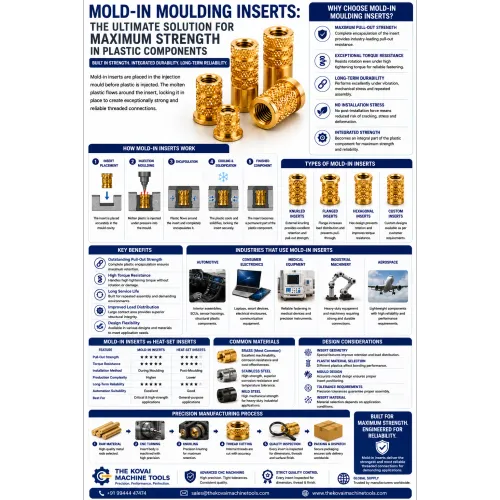
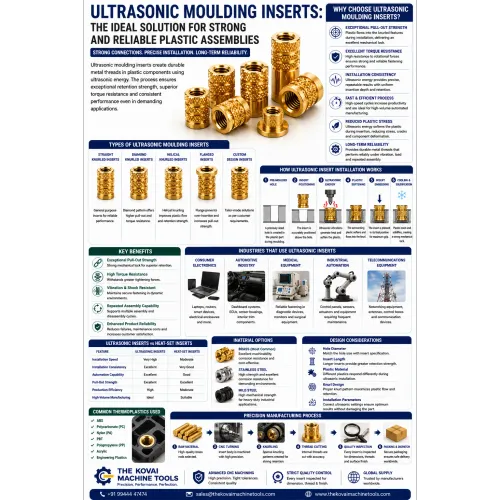
Knurling refers to the textured patterns machined onto the outer surface of moulding inserts. These patterns improve grip, increase retention strength, and prevent insert movement inside plastic components.
In this article, we will explore how knurling improves the performance of moulding inserts, the different types of knurling patterns, and why precision knurling is essential for modern industrial applications.
What Is Knurling in Moulding Inserts?
Knurling is a machining process used to create textured patterns on the outer surface of metal inserts.
These patterns are usually formed using specialized tooling during CNC turning or precision machining operations.
The purpose of knurling is to create a mechanical locking effect between the insert and the surrounding plastic material.
Without knurling, inserts may:
- Rotate during screw tightening
- Pull out under mechanical load
- Loosen over time
- Fail during repeated assembly cycles
Knurling helps prevent these issues by increasing surface grip and improving bonding with plastic.
Why Smooth Inserts Are Not Enough
Plastic materials generally have lower strength and rigidity compared to metals.
If a smooth insert is installed inside plastic:
- The contact area between metal and plastic becomes limited
- Friction is reduced
- The insert may rotate or move under stress
This can compromise the entire assembly.
Knurling creates surface irregularities that allow the plastic to flow into the grooves during installation, forming a secure mechanical interlock.
How Knurling Improves Moulding Insert Performance
1. Increases Insert Retention Strength
One of the primary functions of knurling is improving retention strength.
The knurled pattern increases the surface area of the insert and creates grip points that lock into the plastic material.
This helps the insert resist:
- Pull-out forces
- Rotational movement
- Mechanical stress
As a result, the insert remains securely fixed inside the plastic component.
2. Prevents Insert Rotation
When screws are tightened into moulding inserts, torque is transferred to the insert body.
Without proper grip, the insert may rotate inside the plastic.
Knurling prevents this by creating mechanical resistance between the insert and the surrounding material.
This ensures stable fastening and reliable assembly.
3. Improves Load Distribution
Knurled surfaces help distribute mechanical loads more evenly across the plastic component.
This reduces stress concentration around the insert area and minimizes the risk of:
- Plastic cracking
- Material deformation
- Structural failure
This improves the overall durability of the component.
4. Enhances Performance in Repeated Assembly
Many products require repeated assembly and disassembly during maintenance or servicing.
Knurled inserts provide stable retention even after multiple fastening cycles.
This ensures long-term performance without insert loosening.
5. Improves Bonding During Heat-Set Installation
In heat-set insert applications, the surrounding plastic softens during installation and flows around the knurled surface.
Once cooled, the plastic solidifies inside the knurled grooves, creating a strong bond.
This significantly increases pull-out resistance and long-term stability.
Common Types of Knurling Patterns Used in Moulding Inserts
Different knurling patterns are used depending on the application and performance requirements.
Straight Knurling
Straight knurling consists of parallel lines running along the insert surface.
Features
- Provides good axial grip
- Suitable for moderate load applications
- Commonly used in general-purpose inserts
Diamond Knurling
Diamond knurling creates a crisscross pattern on the insert surface.
Features
- Excellent grip in multiple directions
- High resistance to rotation and pull-out
- Widely used in high-strength applications
Diamond knurling is one of the most commonly used patterns in moulding inserts.
Helical Knurling
Helical knurling creates angled grooves around the insert body.
Features
- Improves installation performance
- Enhances mechanical locking
- Suitable for specialized applications
Combination Knurling
Some inserts use a combination of knurling patterns to achieve maximum performance.
These designs are customized based on application requirements.
Importance of Precision Knurling
The effectiveness of knurling depends heavily on manufacturing precision.
Poorly machined knurling can result in:
- Weak insert retention
- Uneven grip
- Plastic damage during installation
- Assembly issues
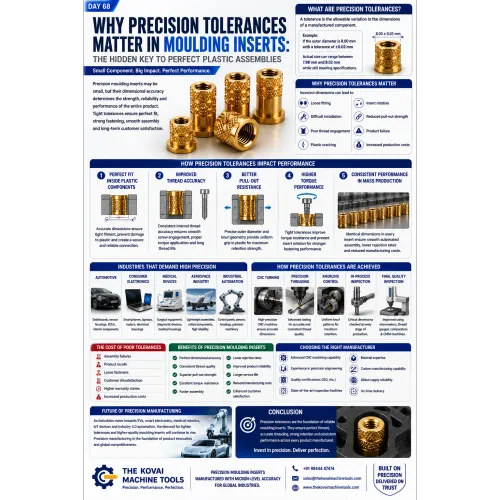
Precision machining ensures that the knurling pattern is manufactured accurately with consistent depth, spacing, and surface finish.
This is why high-quality moulding inserts are produced using advanced CNC machining processes.
Industries That Depend on Knurled Moulding Inserts
Knurled moulding inserts are used across many industries where reliable fastening is critical.
Automotive Industry
Automotive plastic components require strong threaded connections that can withstand vibration and mechanical stress.
Knurled inserts provide stable retention in dashboards, sensor housings, and control systems.
Consumer Electronics
Electronic devices use knurled inserts in plastic enclosures to ensure durable screw fastening and repeated assembly capability.
Medical Equipment
Medical devices require precision fastening and reliable performance.
Knurled inserts provide secure assembly in plastic medical components.
Industrial Machinery
Industrial equipment uses knurled inserts to reinforce plastic components exposed to heavy mechanical loads.
Material Selection for Knurled Inserts
Knurled inserts are manufactured using various engineering materials based on application needs.
Brass Inserts
Brass offers excellent machinability and is ideal for precision knurling.
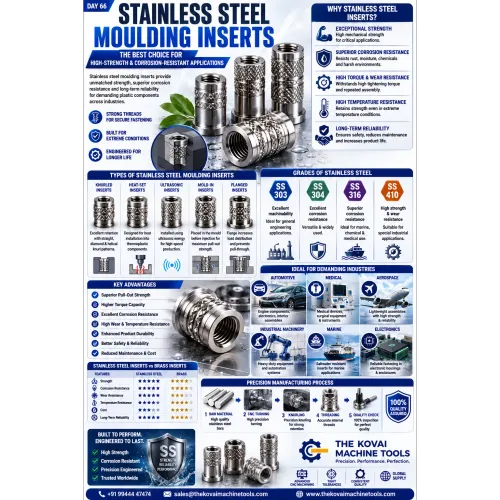
Stainless Steel Inserts
Stainless steel provides high strength and corrosion resistance.
Mild Steel Inserts
Mild steel inserts are used for heavy-duty industrial applications.
Aluminium Inserts
Aluminium inserts are used in lightweight assemblies.
Benefits of High-Quality Knurled Inserts
Using precision-manufactured knurled inserts provides several long-term benefits:
- Stronger fastening performance
- Higher pull-out resistance
- Improved vibration resistance
- Longer product life
- Reduced maintenance issues
- Reliable repeated assembly
These advantages make knurled inserts essential in modern plastic component design.
Conclusion
Knurling is one of the most important design features in moulding inserts.
By creating a strong mechanical bond between metal inserts and plastic components, knurling improves retention strength, prevents rotation, distributes mechanical loads, and enhances long-term durability.
Different knurling patterns such as straight, diamond, and helical knurling are used based on specific application requirements.
Combined with precision CNC machining and high-quality materials, properly designed knurled inserts play a critical role in ensuring reliable performance in modern industrial applications.
Keywords