
Importance of CNC Machining in Precision Manufacturing
Introduction
CNC machining has become one of the most important technologies in modern manufacturing. Industries across the world rely on CNC-machined components for high accuracy, consistency, and durability.
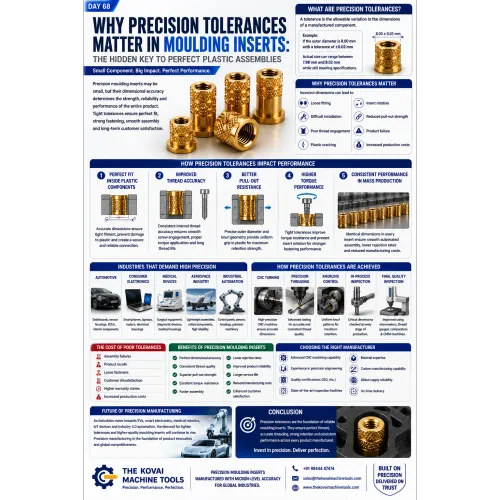
From automotive parts to aerospace assemblies, CNC machining helps produce precision-engineered components with tight tolerances and superior surface finishes.
Today’s industries demand:
✔ High dimensional accuracy
✔ Fast production
✔ Reliable quality
✔ Complex component manufacturing
✔ Consistent performance
This is why CNC machining plays a major role in precision engineering.
What Is CNC Machining?
CNC (Computer Numerical Control) machining is an automated manufacturing process where machines are controlled using computer programs.
CNC machines perform:
- Turning
- Milling
- Drilling
- Threading
- Cutting operations
with high precision and repeatability.
Why CNC Machining Is Important
Traditional machining methods may lead to:
- Dimensional variation
- Lower production speed
- Inconsistent quality
CNC machining eliminates these issues by providing:
✔ Accurate dimensions
✔ Repeatable quality
✔ Faster production cycles
Advantages of CNC Machining
1. High Precision
CNC machines manufacture components with:
✔ Tight tolerances
✔ Accurate dimensions
✔ Consistent quality
This improves product reliability and assembly performance.
2. Faster Production
Automated machining processes reduce:
- Manual work
- Production time
- Human error
This increases manufacturing efficiency.
3. Complex Component Manufacturing
CNC technology can produce:
✔ Intricate shapes
✔ Precision threads
✔ Multi-step components
with excellent accuracy.
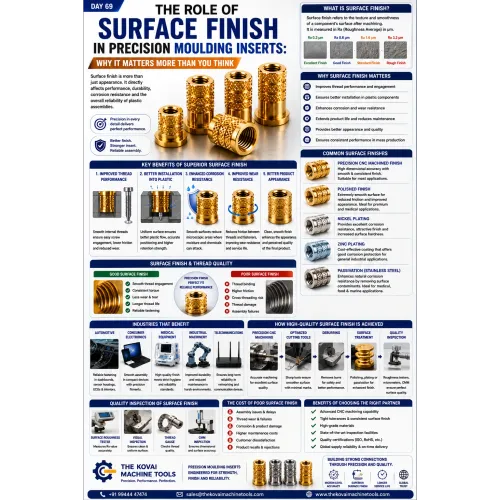
4. Better Surface Finish
CNC-machined components achieve:
✔ Smooth surface quality
✔ Improved appearance
✔ Better functional performance
Industries Using CNC Components
Automotive Industry
Used in:
- Shafts
- Engine components
- Fasteners
- Precision assemblies
Benefits:
✔ Better vehicle performance
✔ Long-lasting durability
Aerospace Industry
Requires:
✔ Lightweight precision parts
✔ Tight tolerance machining
✔ High-strength components
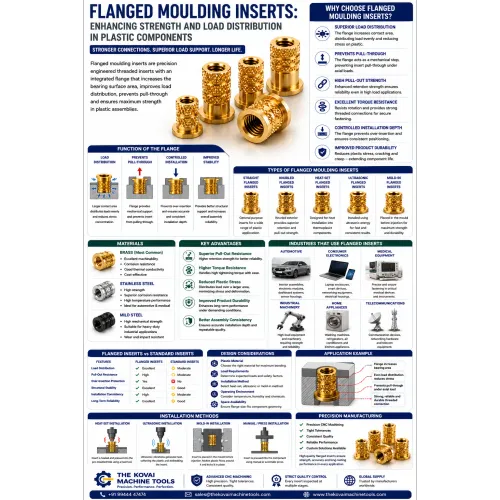
Electrical & Electronics
CNC machining helps manufacture:
✔ Connectors
✔ Inserts
✔ Electronic housings
✔ Precision fasteners
Industrial Machinery
Used in:
- Automation systems
- Hydraulic equipment
- Manufacturing machinery
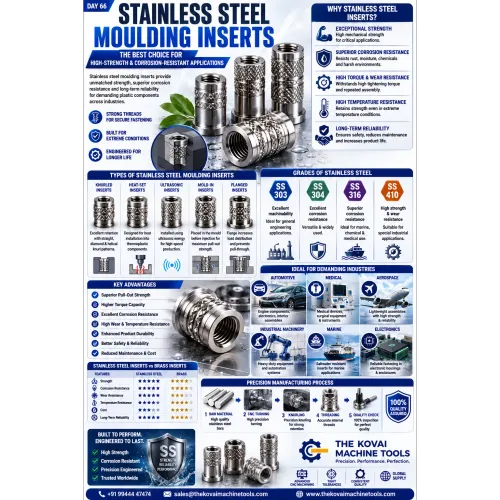
Materials Used in CNC Machining
CNC components are manufactured using:
- Brass
- Aluminum
- Stainless steel
- Mild steel
- Copper alloys
Each material offers unique advantages based on industrial requirements.
Importance of Quality Control
Precision CNC components require strict inspection for:
✔ Dimensional accuracy
✔ Surface finish
✔ Thread quality
✔ Material strength
Quality control ensures:
- Reliable performance
- Zero-defect production
- Customer satisfaction
Surface Finishing in CNC Components
Surface finishing improves:
✔ Corrosion resistance
✔ Product appearance
✔ Wear resistance
Common finishes include:
- Zinc plating
- Nickel plating
- Chrome coating
- Passivation
Future of CNC Manufacturing
Modern industries are moving toward:
- Smart automation
- High-speed machining
- AI-controlled manufacturing
- Sustainable production methods
The demand for high-precision CNC components continues to grow worldwide.
Conclusion
CNC machining is the foundation of modern precision manufacturing. It provides the accuracy, speed, and consistency required for industrial applications.
Benefits include:
✔ High precision
✔ Better durability
✔ Reliable quality
✔ Faster production
As industries continue evolving, CNC machining will remain a critical technology for precision engineering.
Keywords