
Knurling Design Matters in Precision Moulding Inserts
Introduction
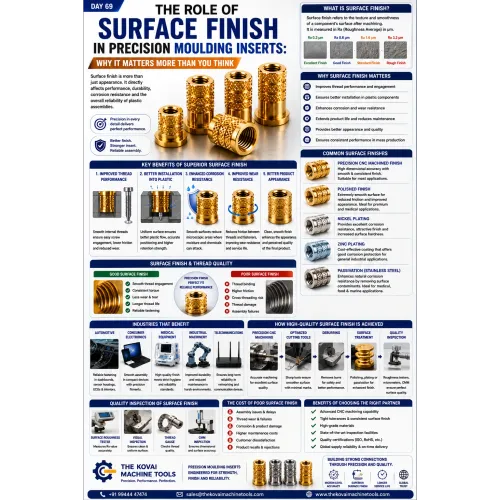
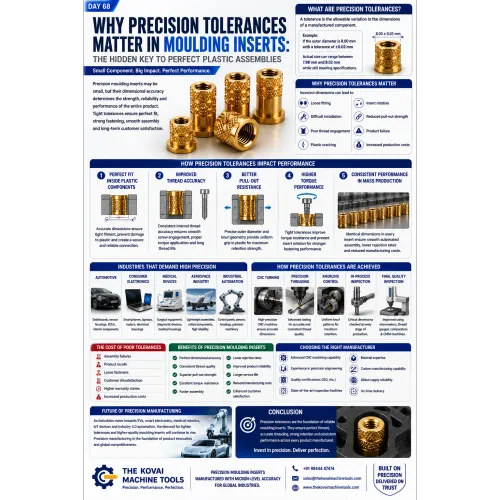
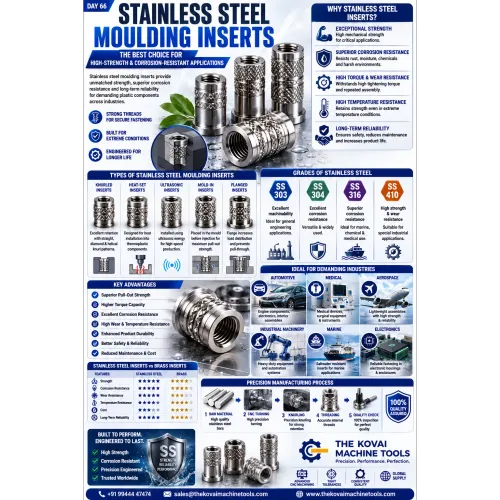
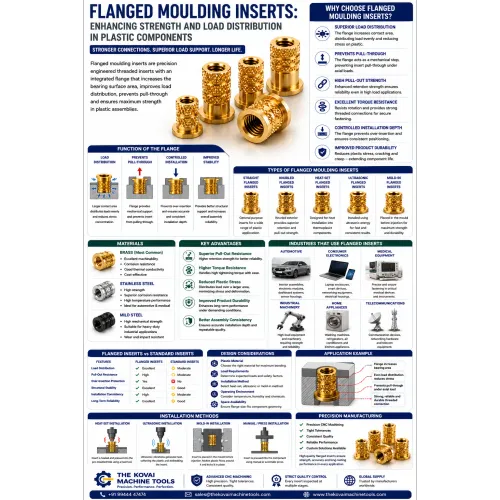
In the world of plastic injection moulding, every small detail in a component design can have a major impact on product performance. One such critical detail is the knurling design used in precision moulding inserts.
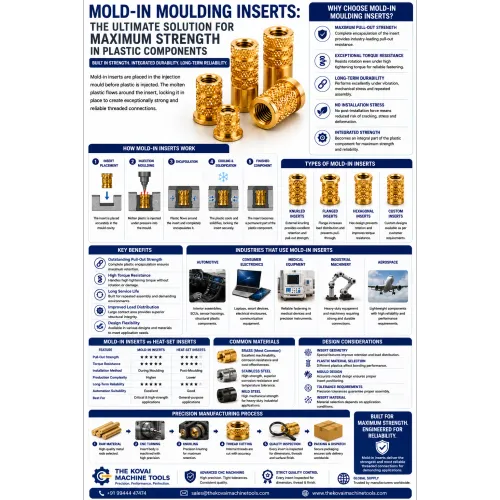
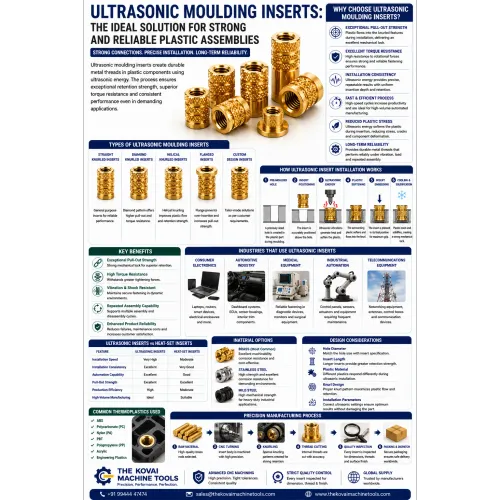
Moulding inserts are widely used in plastic components to provide strong threaded connections and improve structural durability. These inserts are embedded into plastic parts and allow screws or bolts to be fastened securely without damaging the plastic material.
However, simply placing a metal insert inside plastic is not enough.
For the insert to remain stable under load, vibration, repeated assembly, and long-term usage, it must have a strong mechanical grip inside the plastic component. This is where knurling patterns and surface designs become extremely important.
Knurling is one of the most essential design features in moulding inserts because it directly affects:
- Insert retention strength
- Pull-out resistance
- Torque resistance
- Assembly reliability
- Product durability
In this article, we will explore why knurling design matters in precision moulding inserts, the different types of knurling used in industry, and how proper knurling improves the performance of plastic components.
What Is Knurling in Moulding Inserts?
Knurling refers to the patterned texture or serrated surface created on the outer body of a moulding insert.
These patterns are machined onto the insert during manufacturing using precision CNC turning and knurling tools.
The purpose of knurling is to improve the mechanical bonding between the metal insert and the surrounding plastic material.
When the insert is installed into the plastic part, the plastic flows into the knurled grooves and locks the insert firmly in place.
Without proper knurling, the insert may:
- Rotate during fastening
- Pull out under load
- Become loose over time
- Fail during repeated assembly
This is why knurling design is one of the most important aspects of moulding insert engineering.
Why Knurling Design Is Important
The outer surface design of the insert directly influences how effectively it interacts with the plastic material.
1. Improves Insert Retention Strength
One of the primary purposes of knurling is to improve retention strength.
The knurled surface creates mechanical interlocking between the insert and the plastic component.
This prevents the insert from moving or loosening during product usage.
The stronger the grip, the more reliable the assembly becomes.
2. Prevents Insert Rotation
When screws are tightened into inserts, rotational force is applied to the insert body.
If the insert rotates inside the plastic component, the threaded connection becomes unreliable.
Knurling patterns help prevent this by increasing friction and locking the insert securely inside the plastic.
This improves torque resistance and fastening stability.
3. Increases Pull-Out Resistance
Plastic components may experience axial loads during operation.
Without proper retention, inserts can gradually pull out of the plastic material.
Knurling improves pull-out resistance by allowing the plastic to grip the insert more effectively.
This is especially important in automotive, industrial, and high-load applications.
4. Enhances Long-Term Durability
Products used in real-world environments often experience:
- Vibration
- Repeated assembly cycles
- Mechanical stress
- Temperature variations
A properly designed knurling pattern helps maintain insert stability over time, ensuring long-term product durability.
5. Supports Different Installation Methods
Different insert installation methods require specific knurling designs.
For example:
Heat-Set Inserts
Require knurling patterns that allow softened plastic to flow efficiently into the grooves.
Press-Fit Inserts
Require aggressive knurling for strong mechanical gripping.
Ultrasonic Inserts
Need optimized surface patterns for vibration-assisted installation.
Proper knurling design ensures compatibility with the chosen installation process.
Common Types of Knurling Used in Moulding Inserts
Different applications require different knurling styles depending on the plastic material and performance requirements.
1. Straight Knurling
Straight knurling consists of parallel grooves running along the length of the insert.
Advantages
- Good axial retention
- Simple design
- Suitable for moderate loads
Applications
Used in general-purpose moulding inserts and lightweight plastic components.
2. Diamond Knurling
Diamond knurling creates a crisscross pattern on the insert surface.
Advantages
- Excellent grip
- High torque resistance
- Strong pull-out resistance
Applications
Widely used in automotive, industrial, and electronic components.
3. Helical Knurling
Helical knurling features angled grooves wrapped around the insert body.
Advantages
- Smooth installation
- Improved plastic flow during insertion
- Good rotational resistance
Applications
Commonly used in heat-set and ultrasonic inserts.
4. Combination Knurling
Some inserts use multiple knurling patterns combined together for optimized performance.
Advantages
- Balanced retention and torque resistance
- Improved performance in demanding applications
Applications
Used in high-performance industrial and automotive products.
Factors That Influence Knurling Design
The ideal knurling design depends on several engineering factors.
Plastic Material
Different plastics behave differently during insert installation.
Soft plastics may require deeper knurling, while rigid plastics require optimized groove dimensions to avoid cracking.
Installation Method
The installation process affects the required knurling geometry.
Heat-set inserts require different surface patterns compared to press-fit inserts.
Mechanical Load Requirements
Applications exposed to high loads or vibration require stronger knurling designs for better retention.
Insert Size and Shape
Smaller inserts require precision knurling to maintain dimensional accuracy without weakening the insert structure.
Importance of Precision Manufacturing in Knurling
Knurling must be manufactured with high precision to ensure consistent performance.
Poor-quality knurling can result in:
- Weak retention
- Plastic damage
- Misalignment
- Inconsistent assembly
Precision CNC machining ensures:
- Accurate groove dimensions
- Consistent surface patterns
- High repeatability
- Reliable insert performance
This is why industries rely on experienced manufacturers specializing in precision moulding inserts.
Industries That Depend on Precision Knurled Inserts
Knurled moulding inserts are widely used across industries that require durable plastic assemblies.
Automotive Industry
Used in dashboards, electronic modules, and structural plastic components.
Consumer Electronics
Provide strong fastening in plastic housings and electronic assemblies.
Industrial Machinery
Used in equipment requiring high mechanical strength and repeated assembly.
Appliance Manufacturing
Ensure reliable fastening in plastic appliance components.
Benefits of High-Quality Knurling in Moulding Inserts
Well-designed knurling provides several key benefits:
- Strong insert retention
- Improved torque resistance
- Reduced insert loosening
- Better vibration resistance
- Increased product lifespan
- Reliable assembly performance
These benefits directly improve the durability and reliability of plastic products.
Conclusion
Although knurling may appear to be a small design feature, it plays a major role in the performance of precision moulding inserts.
Proper knurling design improves insert retention, prevents rotation, increases pull-out resistance, and enhances long-term durability.
Different knurling patterns such as straight, diamond, helical, and combination knurling are used depending on the application and installation method.
By using precision manufacturing and optimized knurling designs, manufacturers can ensure reliable performance in plastic components used across automotive, electronics, industrial machinery, and appliance industries.
Keywords