
Why Brass Inserts Are the Preferred Choice for Plastic Components
Introduction
In modern manufacturing, plastic components are widely used across industries because they are lightweight, cost-effective, and easy to design. However, plastic alone cannot provide strong and durable threaded connections.
This is where brass inserts play a major role.
Brass inserts are one of the most widely used fastening solutions in industries such as:
- Automotive
- Electronics
- Electrical equipment
- Consumer products
- Industrial machinery
Their combination of strength, corrosion resistance, precision threading, and long service life makes them the preferred choice for plastic assemblies worldwide.
In this blog, we will explore why brass inserts are so important, their benefits, and why industries continue to rely on them for high-performance applications.
What Are Brass Inserts?
Brass inserts are precision-machined metal components embedded into plastic parts to provide:
- Strong internal threads
- Improved fastening strength
- Long-lasting assembly performance
They are commonly installed using:
- Heat staking
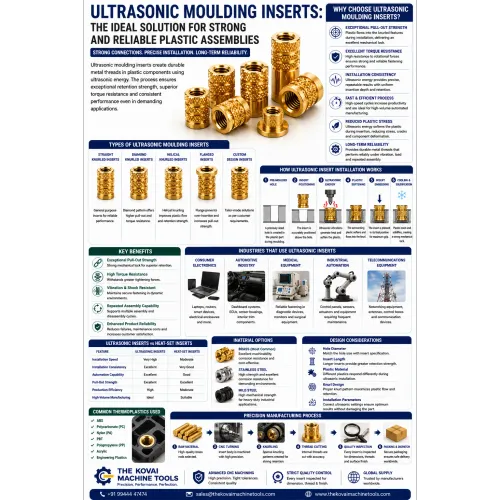
- Ultrasonic insertion
- Press fitting
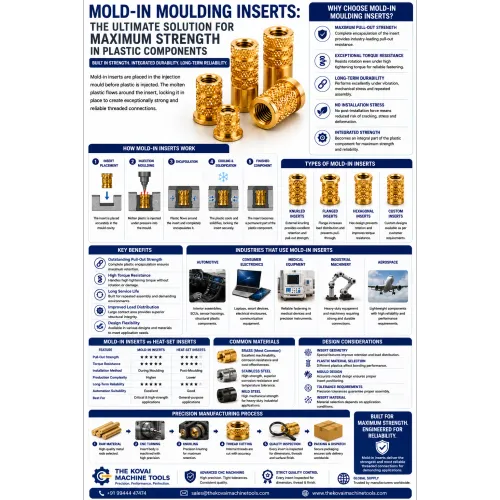
- Mould-in techniques
Why Brass Is Preferred for Inserts
1. Excellent Corrosion Resistance
Brass naturally resists:
- Rust
- Moisture damage
- Environmental corrosion
👉 Ideal for long-term industrial use.
2. Superior Machinability
Brass is easy to machine with high precision.
This allows manufacturers to produce:
- Accurate threads
- Fine knurling
- Tight tolerances
3. Strong Thread Performance
Brass inserts provide:
- Reliable screw engagement
- Smooth fastening operation
- Reduced thread wear
4. High Durability
Brass inserts can withstand:
- Repeated assembly and disassembly
- Continuous operational stress
5. Excellent Thermal Conductivity
Brass responds well to heat insertion processes.
👉 This makes installation easier and more reliable in plastic components.
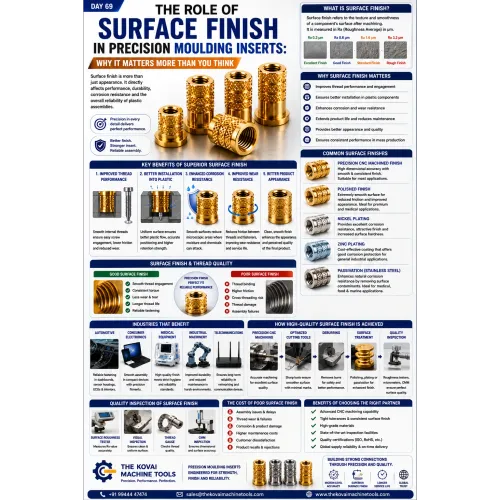
Importance of Knurling in Brass Inserts
Knurling improves:
- Grip strength
- Pull-out resistance
- Anti-rotation performance
When plastic flows into the knurled surface, it creates strong mechanical locking.
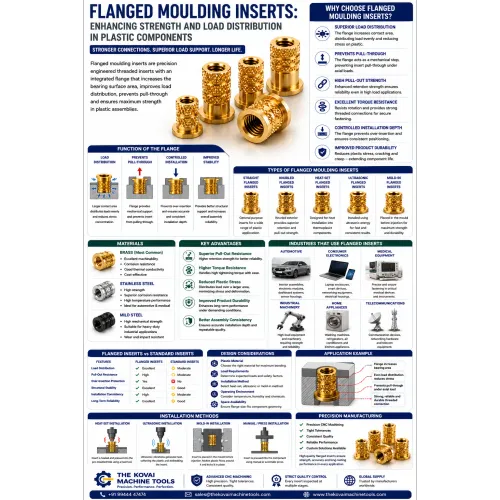
Common Types of Brass Inserts
Heat Set Inserts
Installed using controlled heat for strong bonding.
Ultrasonic Inserts
Installed using ultrasonic vibration for fast and accurate placement.
Press-In Inserts
Mechanically pressed into plastic parts.
Mould-In Inserts
Placed during injection moulding itself.
Industries Using Brass Inserts
Automotive Industry
Used in:
- Dashboard assemblies
- Plastic housings
- Electrical systems
Electronics Industry
Used in:
- Mobile devices
- Laptop enclosures
- Electrical components
Consumer Products
Used in:
- Home appliances
- Furniture fittings
- Plastic accessories
Benefits for Manufacturers
Using brass inserts provides:
- Faster assembly
- Reduced rejection rates
- Stronger products
- Better quality consistency
Benefits for End Users
For customers, brass inserts ensure:
- Long product life
- Reliable fastening
- Easy maintenance
- Better overall durability
Challenges with Low-Quality Brass Inserts
Poorly manufactured inserts can cause:
- Loose fitting
- Rotation inside plastic
- Thread damage
- Reduced pull-out strength
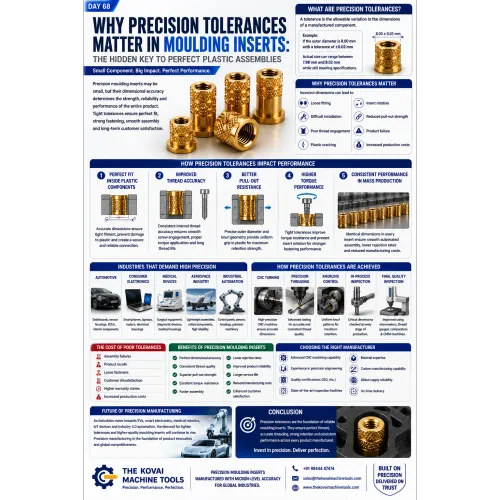
This is why precision manufacturing is extremely important.
Importance of Precision Manufacturing
High-quality brass inserts require:
- Precision CNC machining
- Accurate threading
- Consistent knurling
- Strict quality control
These factors ensure long-term performance and reliability.
Future Demand for Brass Inserts
With increasing demand for:
- Lightweight products
- Plastic assemblies
- Electric vehicles
- Smart electronics
The demand for precision brass inserts is continuously growing.
Conclusion
Brass inserts are small components with a huge impact on product strength, durability, and reliability.
Their corrosion resistance, precision threading, and excellent fastening performance make them the preferred choice for plastic components across industries.
Choosing high-quality brass inserts ensures better product performance, longer service life, and reduced maintenance issues.
Keywords