Surface Finishing Matters in Precision Industrial Components
Introduction
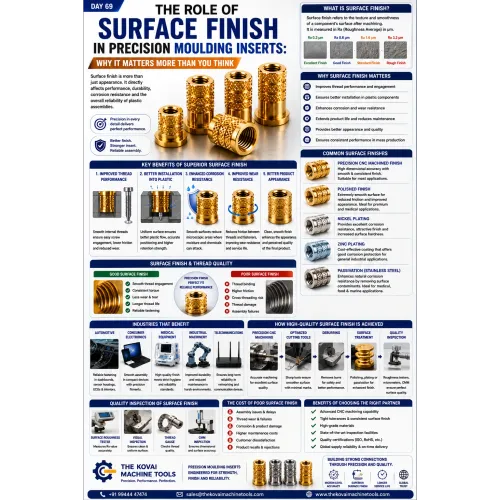
In modern manufacturing, the quality of a component is not determined only by its dimensions or material strength. Surface finishing also plays a major role in product performance, durability, appearance, and corrosion resistance.
Precision industrial components used in:
- Automotive systems
- Electrical assemblies
- Industrial machinery
- Aerospace products
- Consumer electronics
must withstand challenging operating conditions. Proper surface finishing helps improve reliability and extends the service life of these components.
Today, industries demand:
✔ Corrosion-resistant components
✔ Smooth surface finish
✔ Better wear resistance
✔ Improved appearance
✔ Enhanced durability
This is why surface treatment and finishing processes are critical in precision engineering.
In this blog, we will explore:
- What surface finishing is
- Why it is important
- Common industrial finishing processes
- Benefits of quality surface treatment
- Industrial applications
- Future trends in surface engineering
What Is Surface Finishing?
Surface finishing refers to the process of improving the outer layer of a component through mechanical, chemical, or electroplating methods.
It enhances:
✔ Surface quality
✔ Corrosion resistance
✔ Product appearance
✔ Wear resistance
Surface finishing is commonly applied to:
- Brass inserts
- CNC turned components
- Rivet nuts
- Fasteners
- Precision machined parts
Why Surface Finishing Is Important
Without proper finishing, industrial components may suffer from:
- Rust formation
- Surface damage
- Poor appearance
- Reduced durability
- Premature failure
High-quality finishing protects components and improves their performance.
Benefits of Surface Finishing
1. Corrosion Resistance
Surface coatings protect components from:
✔ Moisture
✔ Chemicals
✔ Environmental exposure
This significantly increases product life.
2. Better Appearance
Finishing processes provide:
✔ Smooth texture
✔ Clean metallic shine
✔ Professional appearance
This improves product value and customer satisfaction.
3. Improved Wear Resistance
Finished surfaces reduce:
- Friction
- Surface damage
- Mechanical wear
This improves long-term performance.
4. Enhanced Product Durability
Surface treatment helps components withstand:
✔ Harsh environments
✔ Continuous usage
✔ Heavy industrial applications
Common Surface Finishing Processes
Zinc Plating
Widely used for:
- Steel fasteners
- Rivet nuts
- Industrial hardware
Benefits:
✔ Corrosion resistance
✔ Cost-effective protection
Nickel Plating
Used for:
- Brass inserts
- Decorative components
- Electrical parts
Advantages:
✔ Smooth finish
✔ Improved hardness
✔ Better corrosion resistance
Chrome Plating
Provides:
✔ High durability
✔ Bright appearance
✔ Surface protection
Passivation
Used mainly for stainless steel components.
Benefits:
✔ Improved corrosion resistance
✔ Cleaner surface finish
Importance of Surface Finish in Precision Components
Precision-engineered parts require:
✔ Uniform coating thickness
✔ Smooth surface texture
✔ Consistent finishing quality
This ensures:
- Proper assembly fitment
- Better functionality
- Reliable performance
Industries Using Surface-Finished Components
Automotive Industry
Used in:
- Fasteners
- Shafts
- Engine components
- Structural assemblies
Benefits:
✔ Corrosion resistance
✔ Longer component life
Electrical & Electronics
Surface finishing improves:
✔ Conductivity
✔ Protection from oxidation
✔ Product reliability
Aerospace Industry
Requires:
✔ Lightweight precision components
✔ High corrosion resistance
✔ Extreme durability
Industrial Machinery
Used in:
- Hydraulic systems
- Automation equipment
- Heavy-duty assemblies
Quality Control in Surface Finishing
High-quality finishing requires inspection of:
✔ Coating thickness
✔ Surface smoothness
✔ Corrosion resistance
✔ Dimensional accuracy
Strict quality checks ensure:
- Consistent performance
- Reliable durability
- Customer satisfaction
Challenges of Poor Surface Finishing
Low-quality finishing can cause:
- Rust formation
- Surface peeling
- Thread damage
- Poor assembly performance
- Reduced component life
This increases:
- Maintenance costs
- Product rejection
- Downtime
Future of Surface Engineering
Modern manufacturing is moving toward:
- Eco-friendly coatings
- High-performance plating
- Nano-coating technology
- Advanced corrosion protection systems
Industries now prioritize:
✔ Sustainable manufacturing
✔ High durability
✔ Better performance
Conclusion
Surface finishing is a critical part of precision manufacturing.
It improves:
✔ Corrosion resistance
✔ Product durability
✔ Surface appearance
✔ Mechanical performance
High-quality surface treatment helps industries achieve reliable, long-lasting, and high-performance components.
Choosing properly finished precision components ensures better operational efficiency and reduced maintenance costs.
Keywords